
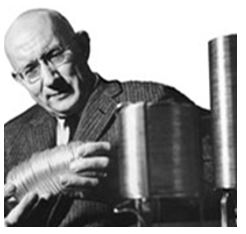
 The Marcel Golay award was instituted in honor of Marcel Jules Eduard Golay, the inventor of capillary columns.
Dr. Golay, one of the pioneers of gas chromatography, introduced the theory of dispersion in open tubular columns (capillary columns) and demonstrated their efficacy at the second International Symposium on Gas Chromatography in 1958. Dr. Golay joined PerkinElmer in 1962 as a senior scientist, and invented the Golay infrared sensor, which at the time was the most sensitive infrared sensor available.
Golay’s invention helped establish PerkinElmer as a major source of infrared technology. He also extended the theory of preparative columns and examined the properties of various chromatography sampling systems. The open tubular gas chromatography column is the most popular analytical gas chromatography column in use today. Dr. Golay worked as was a senior scientist at PerkinElmer up until his death in 1989. The Marcel Golay award is presented to a scientist in recognition of a lifetime of achievement in capillary chromatography.
 Carlo Bicchi is Full Professor at the Faculty of Pharmacy of the University of Turin since 1990. His research focuses on the development of advanced analytical technologies for the study of biologically active specialized metabolites in plant matrices, including essential oils, terpenoids, phenolic compounds, and alkaloids, as well as on aroma profiling and fingerprinting of major industrial food crops such as coffee, cocoa, hazelnuts, olive oil, and tea. His work encompasses all aspects of sample preparation, advanced chromatographic techniques, and chemometric methods for profiling and fingerprinting. Prof. Bicchi has actively promoted the development of analytical sciences through international collaboration, mentoring, and participation in scientific boards, conferences, and editorial activities.

 The Giorgio Nota
 Award was instituted in honor of Giorgio Nota, who first introduced open tubular LC.
The Giorgio Nota award is presented to a scientist in recognition of a lifetime of achievement in capillary liquid chromatography.
The Giorgio Nota Award 2026 is sponsored by Waters.
 Fernando Mauro Lanças is a full Professor at the Institute of Chemistry of the University of São Paulo at São Carlos, Brazil, where he founded and currently coordinates the Chromatography Laboratory. His commitment to promoting and disseminating the culture of chromatography in Latin America, as founder of the Latin American Congress of Chromatography (COLACRO), the Brazilian Symposium on Chromatography (SIMCRO), and the International Institute of Chromatography (IIC), has made it possible to build a lasting bridge between Latin America and the rest of the world, fostering scientific collaboration, advancing research excellence, and strengthening the global chromatographic community. His primary research interest is currently focused on the complete miniaturization and automation of sustainable sample preparation – chromatography – mass spectrometry techniques and the practical implementation of the Unified Chromatography concept.


The award honors an experienced GC×GC scientist who has made significant contributions to the field.
The Scientific Achievement Award was instituted in 2011 and recognizes GC×GC scientists who have 15 or more years of continuous contributions in the field.
The 2026 GC×GC Lifetime Achievement Award is sponsored by SepSolve Analytical, Markes International and LECO.
 Prof. James Harynuk is currently a Full Professor at the University of Alberta, Canada. His research focuses on developing advanced analytical tools to tackle challenges such as complex samples, faster analysis times, and lower detection limits. He specializes in multidimensional gas-phase separations, including GC×GC, heart-cut GC (GC-GC), and advanced data handling tools. Applications of his work span health research, metabolite profiling, forensic science, petrochemicals, and environmental science.
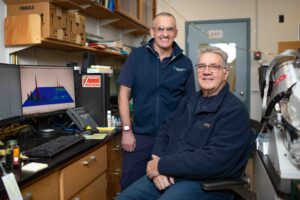 Christopher Reddy is senior scientist at the Department of Marine Chemistry and Geochemistry at the Woods Hole Oceanographic Institution in Woods Hole, Massachusetts. Reddy received his B.S. degree in chemistry from Rhode Island College and his Ph.D. in chemical oceanography from the Graduate School of Oceanography at the University of Rhode Island. His research focuses on the environmental fate of organic pollutants in the ocean, often using advanced analytical techniques such as GC×GC and compound-specific isotope analysis. Drawing on lessons from past pollution, he works to design safer, more environmentally friendly materials.
 Comprehensive two-dimensional gas chromatograpy, or GC×GC, was invented by the late Professor John Bruce Phillips of Southern Illinois University at Carbondale and his then graduate student, Dr. Zaiyou Liu. The Phillips Prize will be awarded every other year to individuals who have made outstanding contributions to the field of GC×GC analysis. The Phillips Award first given in 2004 recognizes individuals who have typically worked in the GC×GC field for less than 10 years but have demonstrated good leadership through their scientific peer-reviewed work.
The 2026 John Phillips Award sponsored by LECO consists of a cash prize and a scroll with the winner’s name.
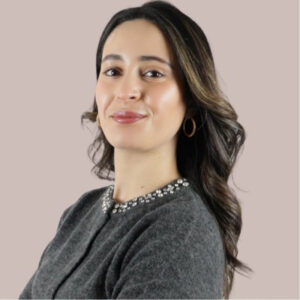 Dr. Meriem Gaida obtained Ph.D. in Analytical Chemistry from the University of Liège (Belgium) in August 2023, specializing in separation science with expertise in GC×GC-ToFMS. Her research focused on advanced analytical strategies for complex chemical profiling and data interpretation, and she further expanded her expertise as a visiting researcher at the University of Washington (USA). After completing her doctorate, she joined SepSolve Analytical Ltd. (UK) as an Applications Specialist, where she developed and optimized customized GC×GC-ToFMS solutions for industrial and academic clients, providing technical support, method development, and training. In September 2024, she moved to LUZI AG (Switzerland), where she currently serves as Product Safety Science Manager, overseeing regulatory compliance, safety assessments of fragrance ingredients, and product safety documentation in line with European regulations.
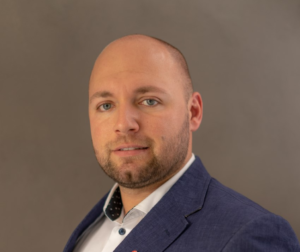 Petr Vozka is an Associate Professor of Chemistry and Biochemistry at California State University, Los Angeles, where he directs the Complex Chemical Composition Analysis Laboratory (C3AL). He earned a B.S. in Chemistry and Chemical Technologies, and an M.S. in Chemistry and Technology of Fuels and Environment from the University of Chemistry and Technology, Prague, followed by a Ph.D. from Purdue University focused on analytical chemistry of liquid transportation fuels. His research group develops and applies advanced separation and detection strategies, especially comprehensive two-dimensional gas chromatography (GC×GC) coupled with mass spectrometry, to resolve and quantify highly complex mixtures that challenge conventional methods. Application areas include alternative and sustainable fuels, microplastics and related environmental matrices, and forensic analyses such as chemical imaging of fingerprints.
 The Fritz Pregl award of the Austrian Society of Analytical Chemistry (ASAC) was established in 1955. Since then, it is awarded at irregular intervals primarily at national and international scientific events and symposia.
The medal’s namesake, Friedrich Michael Raimund PREGL, received the Nobel Prize in Chemistry in 1923 for his groundbreaking work in the field of microchemical methods, which are closely linked to microanalytical applications. Fritz Pregl is the doyen of Austrian analysts. In his honor, the ASAC established the Pregl Medal, which is awarded to individuals who have made significant and outstanding contributions in the field of analytical chemistry, particularly organic trace analysis.
 Prof. Christian Huber is currently professor of chemistry for biosciences at the Paris Lodron University in Salzburg, Austria. After finishing his masters and Ph.D. at the university of Innsbruck he continued as an assistant professor at this university.
In 1996 Prof. Huber spent several months researching at Yale university in the group of Prof. Csaba Horvath. A year later he was appointed Associate Professor in Innsbruck. From 2002 he held the position of Professor of Analytical Chemistry at the Department of Chemistry, Division of Instrumental Analysis and Bioanalysis, Saarland University, Saarbrücken, Germany. From there he moved to Salzburg in 2008. Prof. Huber is a worldwide known researcher with a strong focus on separation sciences in particular for the analysis of large bio-molecules. According to Google Scholar his work has been cited more than 13500 times with an h-index of 63. In recognition of his contributions to HPLC and HPLC-MS, Prof. Huber will receive the Pregl Award Medal from the Austrian Society of Analytical Chemistry.

During the symposium, selected young oral lecture will be presented as GENZO SHIMADZU selection.
The awards, sponsored by Shimadzu Corporation, will be presented during the closing session of GC×GC and ISCC Symposia.
 The Richard Sacks GC×GC Poster awards were instituted in 2013 to honor the late Prof. Richard D. Sacks (1943-2006).
Prof. Sacks was an internationally recognized scientist for his work on analytical instrumentation in atomic emission spectroscopy and gas chromatography (GC inlet systems and miniature GC×GC).
Prof. Sacks was also an outstanding teacher at the University of Michigan for 37 years, and a strong supporter of young undergraduate and graduate school researchers throughout his career. These awards will be given to the top 3 student posters presented at the GC×GC conference.
The Richard Sacks best poster awards will be sponsored by LECO.
2 Best Poster prizes (one for symposium) for selections of books, offered by ABC Springer

1 Best Poster prize for ISCC (for selections of books) offered by Analytical Methods – RSC


1 Best Oral for ISCC, sponsored by Molecules.
1 Best Young Oral GC×GC, sponsored by Separations.
The awardees, sponsored by Molecules and Separations (MDPI), will be presented during the closing session of GC×GC and ISCC Symposia.